
14 Oct Laura C. Rader The Lark #HistoricalFiction #TheLark #WizardofOz #BiographicalHistoricalFiction #BlogTour #TheCoffeePotBookClub @LauraCR_Author @cathiedunn
FEATURED AUTHOR: LAURA C. RADER
I’m delighted to welcome Laura C. Rader as the featured author in the The Coffee Pot Book Club Blog being held between October 8th – 29th, 2026. Laura C. Rader is the author of the Historical Fiction, The Lark, published by Echoes Publishing on September 23, 2026 (425 pages).
Below are highlights of The Lark, Laura C. Rader’s author bio, and an excerpt of the novel.
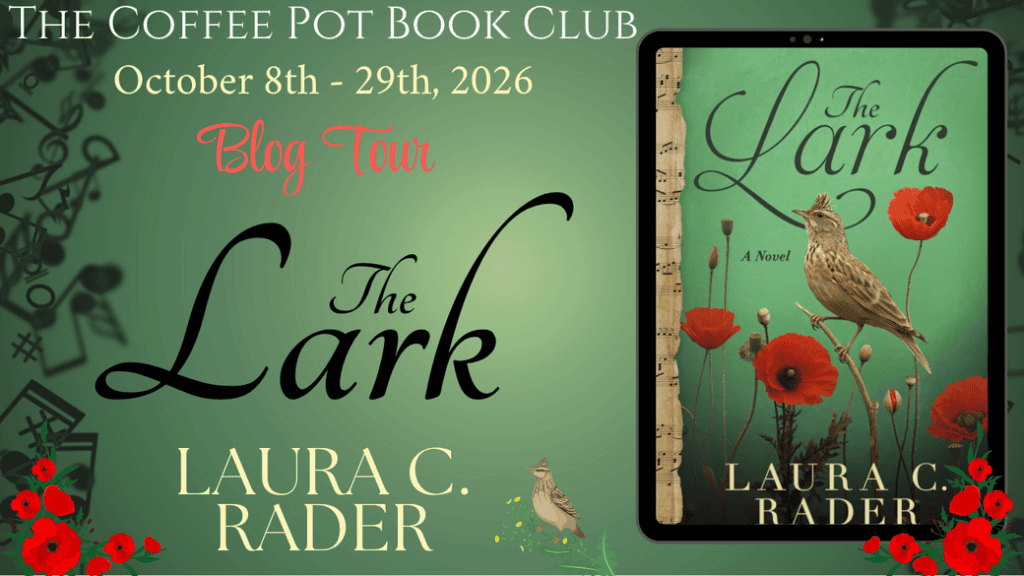
Tour Schedule Page: https://thecoffeepotbookclub.blogspot.com/2026/09/blog-tour-the-lark-by-laura-c-rader.html
HIGHLIGHTS: THE LARK

The Lark
by Laura C. Rader
Blurb:
When The Wizard of Oz graced the silver screen in 1939, it changed cinema and popular culture forever. But the true story began decades earlier with the young composer who risked everything to bring it to the Broadway stage.
At the turn of the century, twenty-three-year-old Paul Tietjens is a gifted classical pianist with dreams of greatness and a non-refundable ticket to Europe to study with the master composers of his time.
But when the bank calls in the debt on his family’s Missouri farm, Paul forgoes his dream to save them from financial ruin. Desperate to find a new road to success, he moves to up-and-coming Chicago, where he persuades author L. Frank Baum to collaborate on a comic opera of The Wonderful Wizard of Oz, setting the stage for the defining cultural touchstone that we know today.
Paul embarks on his opera with high hopes, but scandal threatens his soaring ambition when he falls in love with his best friend’s beautiful but married sister, and his fears grow as the Wizard of Oz demands not only his talent but his soul.
Inspired by Paul’s 1901 diary, The Lark follows Paul as he journeys from the theaters of Chicago to the streets of Manhattan, from his family’s Missouri farm to the beaches of Michigan, fighting to hang onto the chance of a lifetime, his integrity, and the woman he loves.
Buy Link:
Universal Buy Link: https://books2read.com/u/m0RDZV
AUTHOR BIO: LAURA C. RADER
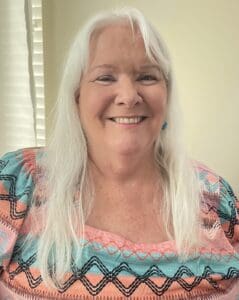
Laura C. Rader is the award-winning author of the biographical historical novel Hatfield 1677. When she isn’t writing, you can find her conducting research, playing her 1905 antique piano, and spending time with her family, friends, and pets.
A native of Southern California, she now lives north of Raleigh, North Carolina.
Author Links:
Website Twitter / X Facebook Instagram Threads Bluesky
Pinterest Book Bub TikTok Amazon Author Page Goodreads
EXCERPT: THE LARK

Chapter Three
August 1900
St. Louis, Missouri
“Then you must go to the City of Emeralds. Perhaps Oz will help you… It is a long journey, through a country that is sometimes pleasant and sometimes dark and terrible.”
—The Wonderful Wizard of Oz by L. Frank Baum, 1899
We sat in absolute silence, holding our collective breath. Mama opened the windows, but no breeze came from the Mississippi River, and the curtains hung like shrouds. As the silence lingered, we grew afraid to disturb it, softly setting down our silverware and swallowing our last bites of Sunday dinner. My once crisply starched dress shirt clung to my chest. I loosened the knot of my tie.
Ollie caught my gaze and bit her lower lip. Otto buttered his third dinner roll. Mama took her linen napkin from her lap and gave it her full attention, folding it into a neat triangle, her lips pursed. Papa, usually jovial and boisterous at meals, turned the pages of a seed catalog. The title in calligraphy on the cover, The Harnden Seed Company, Kansas City, Missouri, was encircled by orange nasturtiums and violet sweet peas.
We waited.
Papa set the catalog down, wiped his brown whiskers, and cleared his throat. Though the noise startled me, it punctured the empty air like a needle to a balloon. I could feel my chest rise and fall again.
“Meine Lieben, I don’t know how to say this, so I’ll just get on with it.” Papa reached over and took Mama’s hand. She stiffened as if his touch had turned her to stone.
“I’ve tried to keep the worst from you over the years. But in truth, the economy hasn’t recovered since ’93. Wheat and corn prices continue to fall.” Papa looked at each of us in turn, then cleared his throat. “Our feed store hasn’t turned a profit for the past seven years.”
Seven years? I looked at Otto, seeking his reaction, but he averted his gaze.
“What about our farm? Our crops?” Ollie asked, her hazel eyes bright with worry.
Papa shook his head. “It would cost more to ship our crops from Slater down the Missouri this summer than they’d net.”
Mama squeezed Papa’s hand, but kept her gaze riveted on her napkin’s monogrammed letter “T.”
I felt guilty leaving food on my plate, wasting what we had, but I didn’t have the stomach to finish it. Instead, I picked up my fork and arranged the veal cutlet, peas, and potatoes into neat piles. Composing.
“I took a loan against our farm to keep the feed store afloat. A five-year balloon loan. It comes due next month, and…” Papa’s voice cracked.
No, not now. We’d survived the collapse of the railroads and the ensuing Panic of ’93. In 1894, Papa had let his workers go. He and Otto spent twelve-hour days at our feed store throughout the Great Depression of the ’90s. I taught piano. We used to call it the “dark years” because we didn’t even have oil for the lamps some nights.
I’d assumed we’d fully recovered, our current lifestyle frugal yet comfortable, in the way many German–Americans’ were. How had I not known?
“I don’t have the money to pay the loan,” Papa said. “If I don’t pay, we lose the farm—and possibly the feed store, the horses, the inventory, all of it.” He pushed his plate away and rubbed his temples. His sideburns were starting to gray.
Mama pulled her hand from Papa’s, shot a look at Ollie, and they stood and started clearing the table. The clatter was as jarring as off-beat cymbals. I winced.
“How can we help?” Otto asked.
Indeed, how could we? My pulse thrummed in my ears. I ran through our finances like I ran through technical work on the piano. My brother clerked in our feed store. I still taught piano. My sister had a hope chest but no expectation of a dowry. We rented out our farm in Slater.
It seemed I was the only one with any savings.
Papa gave me a long, desperate stare. Verdammt. Tears welled in his gray eyes.
So, it had come to this.
I’d saved my earnings since I was sixteen. Seven years. More than $1,000.
Three weeks ago, I’d purchased a voucher for trans-Atlantic passage to Europe. Non-refundable, good for a year. All that remained was the booking.
But I couldn’t ignore Papa’s silent entreaty. My vision grayed, and I heard Otto’s voice as if from a distance.
“Paul? Are you alright? You look as though you’re about to be sick.”
I took a few sips of cool water. Put my elbows on the smooth pine table. Rested my forehead in my hands, waiting till the dizziness passed. “Give me a moment.”
Murmurs came from the kitchen, and the swishing of dishes in soapy water. Oma’s Bavarian wall clock whirred softly and chimed once. A mockingbird sang an ongoing medley in the lilac bush outside the window. Comforting heart sounds of my home, my family. I took a long, slow breath in, then let it out and looked at Papa. I knew what I had to do.
And it crushed me.
“My savings. Is it enough?”
 Twitter: @cathiedunn
Instagram & Threads: @thecoffeepotbookclub
Bluesky: @cathiedunn.bsky.social






No Comments